
Standardized Tractor Truck Remanufacturing
DDiscover the standardized industrial remanufacturing process for tractor truck at REMAN ROAD. From strict base vehicle screening, full disassembly, precision component regeneration to multi-stage testing and certification, our professional workflow differentiates certified reman vehicles from ordinary refurbished trucks.
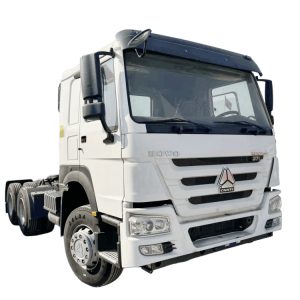
Tractor Truck Remanufacturing Overview
Unlike casual second-hand vehicle renovation or surface repainting, REMAN ROAD adopts complete industrial closed-loop tractor truck remanufacturing standards for all heavy-duty tractor units. The entire process follows factory-level technical specifications, covering vehicle screening, full disassembly, precision detection, component regeneration, bench testing, vehicle reassembly, road calibration and final certification. Every procedure is traceable, standardized and repeatable, ensuring each reman tractor truck restores near-new working performance and long-term operational stability.
Table of Contents
- Step 1: Incoming Vehicle Screening & Feasibility Evaluation
- Step 2: Complete Vehicle Full Disassembly & Classification Sorting
- Step 3. Precision Non-Destructive Testing & Component Calibration
- Step 4: Industrial Component Regeneration & Standardized Replacement
- Step 5: Independent Bench Testing of Core Assemblies
- Step 6: Standardized Whole Vehicle Reassembly & System Matching
- Step 7: Full-Condition Road Test & Load Simulation Verification
- Step 8: Final Quality Audit & Full Traceability Certification
- Core Difference: REMAN ROAD Remanufacturing vs Ordinary Refurbishment
- REMAN ROAD: Brand Positioning, Core Standards & Development Vision
Step 1: Incoming Vehicle Screening & Feasibility Evaluation
Base vehicle quality determines the final reman quality. REMAN ROAD implements strict pre-production screening to eliminate structurally damaged vehicles and ensure all reman units have qualified regeneration foundation.
Full Vehicle Condition Diagnosis:
- Professional technicians conduct comprehensive inspection covering chassis frame structural condition, powertrain running status, axle wear degree, suspension fatigue and electrical system integrity.
- All original vehicle operating records and wear characteristics are recorded in detail.
Structural Defect Elimination:
- Vehicles with frame distortion, crack damage, impact deformation or irreversible structural fatigue are directly eliminated and will not enter the remanufacturing process.
Reman Feasibility Confirmation:
- Evaluate component reuse rate, regeneration cost and post-reman performance stability to confirm whether the vehicle meets industrial reman standards, forming an official incoming inspection report.
Step 2: Complete Vehicle Full Disassembly & Classification Sorting
REMAN ROAD completely dismantles the whole tractor to component level, breaking the limitations of traditional partial maintenance. Full disassembly ensures no hidden internal wear or fatigue is omitted.
Systematic Full Dismantling:
- The whole vehicle is disassembled in strict order: cab system, exterior accessories, electrical circuit, fuel system, braking system, suspension assembly, drive axle, transmission and engine.
- All assemblies are completely separated without omission.
Deep Cleaning & Decontamination:
- All disassembled parts undergo high-pressure sandblasting, chemical deoiling and rust removal treatment to completely eliminate surface oil dirt, oxide layer and sediment, restoring original metal texture for subsequent precision detection.
Three-Type Component Classification:
- All parts are divided into reusable repairable parts, mandatory replacement parts and scrap parts.
- Fatigue parts, aging seals and precision wearing parts are marked for one-time replacement to eliminate hidden dangers.
Step 3: Precision Non-Destructive Testing & Component Calibration
Traditional used truck repairs only observe surface conditions. REMAN ROAD reman tractor truck adopts professional industrial detection equipment to realize internal invisible defect detection, ensuring structural safety and assembly precision.
Chassis Frame NDT Detection:
- Adopt ultrasonic and magnetic particle non-destructive testing technology to scan frame longitudinal beams, cross beams and suspension stress points, accurately detecting invisible fatigue cracks and internal metal damage.
Precision Dimensional Inspection:
- Use precision measuring instruments to detect engine cylinder tolerance, crankshaft deflection, gearbox gear clearance and axle meshing accuracy. All data is compared with factory original standards.
Performance Function Detection:
- Conduct air tightness test, pressure resistance test and electrical circuit conduction test for braking, hydraulic and electrical systems to judge component aging degree and functional integrity.
Step 4: Industrial Component Regeneration & Standardized Replacement
On the basis of accurate detection, REMAN ROAD implements targeted component regeneration and renewal, retaining qualified original base parts and completely replacing failure-prone aging parts to reset the whole vehicle life cycle.
Qualified Parts Industrial Repair:
- For structural intact and standard-compliant metal parts, adopt mechanical correction, surface reinforcement and precision grinding processes to restore factory geometric accuracy and mechanical performance.
Full Renewal of Fatigue Components:
- Uniformly replace all wearing parts including bearings, seals, gaskets, piston rings, brake friction parts and suspension bushings to eliminate aging failure risks fundamentally.
Core Assembly Professional Rebuilding:
- Complete secondary assembly and optimization of engine, transmission and drive axles, calibrate internal clearance and operating parameters to restore stable power output and transmission efficiency.
Step 5: Independent Bench Testing of Core Assemblies
Before vehicle reassembly, all core power assemblies pass independent bench load testing. Single-component performance verification avoids overall vehicle failure caused by individual assembly defects.
Engine Bench Performance Test:
- Simulate full-load operating conditions, detect power output, torque stability, fuel consumption rate and sealing performance, calibrate fuel injection parameters to restore factory fuel economy.
Transmission & Axle Load Test:
- Verify gear shifting smoothness, torque transmission efficiency and heavy-load bearing capacity of the drive system to ensure no abnormal noise, no jamming and no oil leakage under long-term heavy load.
Brake & Air System Calibration Test:
- Carry out full-cycle pressure testing and repeated braking tests to ensure stable air pressure, sensitive response and reliable sealing of the whole brake system.
Step 6: Standardized Whole Vehicle Reassembly & System Matching
After all assemblies pass bench testing, the whole vehicle is reassembled in strict accordance with factory assembly standards, realizing systematic matching and overall performance integration.
Chassis System Reconstruction:
- Install regenerated frame, renewed suspension system and qualified drive axles, standardize bolt torque and assembly gaps to ensure chassis structural stability.
Power & Auxiliary System Assembly:
- Fix rebuilt engine and transmission, renew the whole vehicle wiring harness, oil circuit and air circuit to avoid aging circuit and pipeline failure.
Cab & Exterior Refurbishment:
- Repair cab structure corrosion, renew interior accessories, sealing strips and glass, optimize exterior appearance and realize functional and aesthetic double upgrade.
Step 7: Full-Condition Road Test & Load Simulation Verification
Static assembly cannot fully simulate actual working conditions. REMAN ROAD conducts real road loaded tests to verify vehicle power, braking, stability and adaptability.
Flat Road & Uphill Power Test:
- Detect vehicle acceleration performance, climbing power and power continuity under heavy-load state to ensure stable output for long-distance haulage.
Full-Cycle Braking Stability Test:
- Conduct repeated continuous braking tests to verify brake heat resistance, sensitivity and anti-failure ability under frequent working conditions.
Overall Vehicle Stability Inspection:
- Check chassis vibration, driving deviation, abnormal noise and heat generation to eliminate assembly defects and hidden running risks.
Step 8: Final Quality Audit & Full Traceability Certification
Complete final closed-loop inspection and document sorting to form traceable remanufacturing files for each vehicle, realizing standardized delivery and after-sales guarantee.
Comprehensive Final Inspection:
- Cover power system, chassis structure, braking system, electrical system and exterior functions to ensure all indicators meet REMAN ROAD industrial remanufacturing standards.
Complete Document Sorting:
- Sort incoming inspection records, component replacement logs, bench test data and road test reports to form independent vehicle reman files.
Official Reman Certification Issuance:
- Issue REMAN ROAD exclusive remanufacturing qualification certificate to confirm vehicle industrial regeneration qualification and performance authenticity.
Core Difference: REMAN ROAD Remanufacturing vs Ordinary Refurbishment
Most second-hand trucks on the market only adopt simple cosmetic refurbishment, which cannot eliminate internal hidden failures. REMAN ROAD industrial tractor truck remanufacturing is a systematic technical regeneration project with essential differences in process, quality, risk and full-lifecycle cost.
Process Dimension: Systematic Regeneration vs Partial Cosmetic Repair
- Ordinary refurbishment only focuses on surface cleaning, painting and simple fault repair, retaining original aging internal components and metal fatigue.
- REMAN ROAD remanufacturing realizes full vehicle disassembly, full component detection and targeted renewal, fundamentally solving internal wear problems.
Quality Dimension: Traceable Standardization vs Uncontrolled Randomness
- Refurbished trucks have no unified standards, no test data and no quality records, and vehicle quality depends entirely on manual experience.
- REMAN ROAD forms unified industrial remanufacturing standards, all processes are recorded, all performance data is verifiable, and vehicle quality is stable and consistent in batches.
Risk Dimension: Zero Hidden Danger vs Long-Term Uncertain Failure
- Refurbished vehicles are prone to sudden breakdowns such as power attenuation, brake failure and oil leakage after short-term use, bringing huge downtime losses.
- Reman tractor truck eliminate early failure risks through bench testing and road calibration, with low long-term failure rate and high operational safety.
Full-Lifecycle Cost Dimension: Low TCO vs Low Price & High Consumption
- Refurbished trucks have low upfront purchase cost but high later maintenance cost, frequent downtime and fast asset depreciation.
- REMAN ROAD reman tractor truck balance initial investment and long-term operation, with stable depreciation, predictable maintenance and significantly reduced comprehensive fleet TCO.
Asset Value Dimension: Circular Certified Assets vs Scrapped Second-Hand Goods
- Refurbished trucks belong to simple second-hand transactions with no asset value preservation ability.
- REMAN ROAD certified reman tractor truck have complete industrial regeneration attributes, conform to circular economy standards, have higher residual value and more flexible asset turnover ability.
ESG & Compliance Dimension: Certified Circular Assets vs Unregulated Renovated Vehicles
- Refurbished vehicles lack standardized production records and official compliance certification, failing to meet modern fleet ESG assessment, green procurement and international bidding standards.
- REMAN ROAD industrial remanufacturing follows standardized circular economy workflows with complete material recycling, waste disposal and process traceability systems.
REMAN ROAD: Brand Positioning, Core Standards & Development Vision
REMAN ROAD take remanufacturing technology, standardized process system and quality control as the core, and heavy-duty equipment regeneration as the landing carrier, committed to solving the long-standing quality chaos and cost risks in the global engineering equipment renewal market.
Accurate Brand Positioning
- REMAN ROAD is a standard‑oriented industrial remanufacturing enterprise, not a vehicle sales dealer or equipment refurbishment workshop.
- Our strength lies in developing & rolling out measurable OEM-aligned reman benchmarks, quality standards and full-lifecycle asset rules.
- We create unified evaluation metrics for the fragmented heavy equipment reman sector, shifting the industry away from cosmetic refurbishment.
- With transparent, repeatable reman standards, we help global buyer source qualified regenerated assets and unlock green circular asset value.
Core Brand Principles
- Standardization First, Reject Fake Reman: Adopt OEM technical standards as the sole guideline, discard casual renovation, and guarantee near-new performance for every regenerated unit.
- Technology-Driven Regeneration: Use professional disassembly, cleaning, fatigue removal, precision repair and calibration to restore core performance, instead of simple part swapping.
- Full Transparent Quality Traceability: Archive full-process records for all reman projects to deliver verifiable restoration and eliminate information gaps in used equipment trade.
- Customer Value-Centric: Cut fleet full-lifecycle costs, remove operational safety risks and boost asset returns, delivering stable, cost-effective reman assets.
Brand Vision & Mission
- Mission: Standardize global industrial equipment remanufacturing, delivering low-cost, low-risk, high-value circular asset solutions for worldwide buyers.
- Vision: Become a global benchmark for standardized industrial remanufacturing. Drive the heavy equipment reman industry from rough renovation to standardized technical regeneration, and lead the global green circular equipment economy.
- Core Competitive Advantage: Our standardized reman system forms a closed loop covering vehicle screening, production, performance testing and after-sales support. Clients obtain OEM-grade equipment at reasonable cost, achieving cost reduction, risk mitigation and efficiency gains.