
The Building Blocks of a Reliable Reman Process
Introduce
Many buyers assume reliable reman process comes down to skilled technicians or good workshop equipment. Those are important, but they are not the foundation. A repeatable, low-risk reliable reman process relies on fixed, documented building blocks. Every block acts as a gatekeeper. If one block is weak or skipped, the whole lifecycle reset loses credibility. These core pillars separate genuine reman process from one-off rebuilds, and they can be audited by fleet buyers before purchase.
Core qualification and fatigue screening gate
This is the starting block, and the first non-negotiable filter. Before any disassembly or machining begins, the incoming core must prove it has enough residual structural margin to support a full second lifecycle.
The team reviews service history, overload records and prior accident modifications. Dimensional checks confirm no permanent frame deformation. NDT inspection targets high-stress zones including frame welds, axle housings and suspension brackets. Fatigue modelling synthesises all data to produce a clear pass or fail outcome.
Cores that fail this gate are not pushed into reman process. They are diverted to component harvesting or recycling. This block stops unsafe assets from entering the production flow.

Full disassembly and systematic component sorting
A genuine reman process requires complete teardown, not partial disassembly of only the faulty subsystems. Every fastener, seal, bearing and subassembly is separated, cleaned, tagged and linked back to the parent VIN.
Components are sorted into three fixed categories. Regenerable parts can be machined or surface-restored within OEM tolerance limits. Mandatory renewal parts must be replaced regardless of visual condition. Condemned parts are marked for scrap because fatigue, cracking or deformation cannot be reversed.
This block eliminates the hidden risk of ageing, unexamined parts slipping into reassembly. Partial rebuilds skip this step entirely.
Standardised regeneration rules and part specification control
Regeneration and replacement follow written rules tied to the OEM design envelope.
When parts are machined, material removal limits are strictly enforced. No over-machining is allowed to hide wear, because it would reduce structural safety margins. Replacement components must match the original material grade, heat treatment and performance specification. Generic aftermarket parts are only approved after independent validation, not just because they fit physically.
Harvested donor parts, if used, go through separate requalification. They cannot be mixed casually into the build without verifying compatibility with this specific chassis system. This block prevents silent margin erosion from mismatched or low-grade components.
System-aligned reassembly and calibrated integration
Reassembly is not just bolting parts back together. It follows OEM torque sequences, clearance values and assembly logic. The critical work here is system harmonisation.
Powertrain, cooling, braking, hydraulics, suspension and electronic controls are treated as interdependent groups. ECU parameters are reset and calibrated to factory intent. Brake balance, thermal dissipation and torque distribution are tuned to match the original system design.
Even if individual components perform well on bench tests, misalignment between subsystems creates vibration spikes, heat drift and accelerated wear. This block ensures all parts operate in balance, rather than in isolation.
Loaded end-of-line validation testing
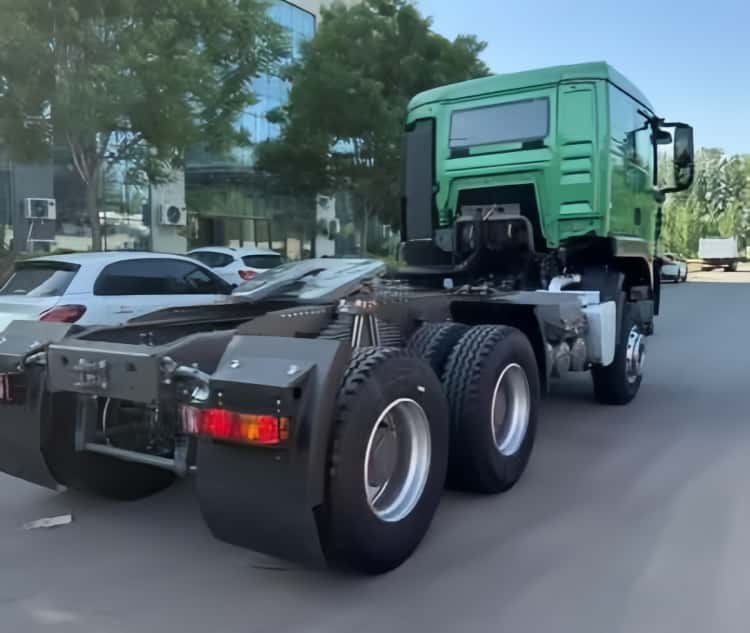
Basic start-up and short road runs are not enough for reman validation. Reliable reman process requires structured end-of-line testing under representative working load.
Test cycles log peak temperatures, pressure stability, leak performance, fault codes, vibration levels and power delivery. The test proves the whole vehicle behaves within the OEM operating envelope, not just that individual assemblies function.
This genuine reman process gate catches calibration errors, hidden leak paths and system harmonisation issues that simple static testing would miss. Only units that pass the full test regime move toward certification.
VIN-locked traceability and auditable documentation
Traceability is the permanent record block that validates all prior decisions. Every inspection, measurement, part serial number, machining log, calibration snapshot and test result is attached to the vehicle’s unique VIN.
The genuine reman record is not a simple one-page certificate. It forms a complete audit trail. Independent auditors, fleet managers and future buyers can review exactly which tests were run, which parts were renewed and why each component was accepted or condemned.
This block also supports residual value forecasting and future re-qualification. When the reman truck reaches the end of its second lifecycle, engineers can reference its full reman history to judge whether another reset is feasible. Without this, certification claims are impossible to verify.
How these blocks work together?
These building blocks are sequential and dependent. A strong traceability system cannot fix a poorly qualified core. Perfect end-of-line testing cannot compensate for using non-compliant replacement parts.
Together, they create a gated reliable reman process. Failure at any single block stops the asset from progressing further. This is what makes reman repeatable across batches. It removes reliance on individual technician judgement and turns quality into a controlled industrial standard.
Fleet buyers can use these six blocks as a simple audit framework. Ask the supplier to demonstrate each block, rather than only asking for a price or a certificate.
Closing thought
A reliable reman process is built layer by layer. Core qualification filters out bad candidates. Full disassembly exposes hidden degradation. Specification controls protect OEM design margins. System calibration aligns all subsystems. Loaded testing proves integrated performance. Traceability preserves proof for the asset’s whole second life.